
Sliding for the fifth straight session, the rupee fell 3 paise to close at a fresh lifetime low of 79.06 against the US dollar on Thursday amid a strong greenback overseas and unrelenting foreign fund outflows. At the interbank forex market, the local unit opened at 78.92 against the greenback and witnessed an intra-day high of 78.90 and a low of 79.07. It finally settled at 79.06, down 3 paise over its previous close of 79.03.

There are various estimates of India's debt to GDP ratio, but the consensus is that that it would be over 80 per cent at the end of the current fiscal year.

Moody's Investors Service on Thursday upped India growth forecast to (-) 10.6 per cent for the current fiscal, from its earlier estimate of (-) 11.5 per cent, saying the latest stimulus prioritises manufacturing and job creation, and focuses on longer-term growth. Last week the government had announced a new fiscal package amounting to Rs 2.7 lakh crore. Moody's said the latest measures aim to increase the competitiveness of India's manufacturing sector and create jobs, while supporting infrastructure investment, credit availability and stressed sectors.

The World Bank has approved loans totalling $1.75 billion (about Rs 13,834.54 crore) to fund India's PM Ayushman Bharat scheme and private investment to boost the economic growth. Of the total loan, $1 billion will go towards the health sector, while the rest $750 million will be in the form of development policy loan (DPL) to fill the financing gaps through private sector investment in the economy. The World Bank Board of Executive Directors approved two complementary loans of $500 million each to support and enhance India's health sector.

S&P Global Ratings has forecast India's economy to shrink by 5 per cent in the current fiscal. It, however, has projected GDP growth to be 8.5 per cent in 2021-22 and 6.5 per cent in 2022-23.
Fitch reaffirmed India's rating at 'BBB-' with a Stable Outlook saying the rating balances a still strong medium-term growth outlook compared with similar category peers and relative external resilience stemming from solid foreign-reserve buffers against high public debt, a weak financial sector and some lagging structural factors, including governance indicators and GDP per capita.

EY said out of the nearly Rs 21 lakh crore package, Rs 8.01 lakh crore is on account of liquidity enhancing measures taken by the RBI since February.

The Budget kept away from mood dampeners such as an increase in taxes (capital gain taxes) and even the much-feared introduction of Covid cess and wealth taxes, says Nimesh Kampani, chairman, JM Financial.

With the fresh wave of COVID-19 plunging the hospitality sector back into uncertainty, industry body HAI on Monday said it has asked the government to consider granting infrastructure status to hotels, extend moratorium on loans and rationalise taxes. In its pre-Budget memorandum, the Hotel Association of India (HAI) said policy interventions are imperative for the sector's survival and its early and quick rebound to normalcy. "The hospitality industry was slowly getting into a recovery mode on the strength of domestic tourism - leisure and events, only to be plunged back into uncertainty on account of the Omicron threat.
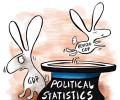
It is also likely to assume a deflator of around 4 per cent. That could take the nominal GDP outlook for FY21 to around 10 per cent. It is this nominal GDP forecast on the basis of which the finance ministry is calculating key Budget targets like the fiscal deficit as a percentage of GDP and tax revenue growth for the coming year.

House economists at the nation's largest lender State Bank of India (SBI) have urged the government to budget for nursing the pandemic-ravaged economy and not to focus too much on fiscal consolidation as there is a need for more stabilisation measures to sustain the fledgling recovery. And one of the best way to begin the new fiscal is to complete the share sale of LIC this fiscal. This can go a long way in repairing the overstretched balance sheet which in turn will bring down fiscal deficit to a much lower 6.3 per cent in FY23 as the public coffers will be left with a cash surplus of at least Rs 3 lakh crore to begin the new fiscal, SBI chief economist Soumya Kanti Ghosh said in a pre-Budget note on Wednesday.

The economists, who were surveyed, also felt it will take time for banks to make any further reduction in deposit rates

The Indian economy, severely hit by the coronavirus pandemic, is projected to contract by a massive 10.3 per cent this year, the International Monetary Fund said on Tuesday. However, India is likely to bounce back with an impressive 8.8 per cent growth rate in 2021, thus regaining the position of the fastest growing emerging economy, surpassing China's projected growth rate of 8.2 per cent, the IMF said in its latest 'World Economic Outlook' report.

Chief Economic Adviser K V Subramanian on Monday said the overall impact of the second wave of COVID-19 on the country's economy is not likely to be large but cautioned about an uncertainty surrounding the pandemic going ahead. He further said that given the circumstances due to the pandemic, it is difficult to forecast if the country would achieve a double digit growth in the current fiscal. The Economic Survey 2020-21 released in January this year had projected GDP growth of 11 per cent during the current financial year ending March 2022.

Moody's Investors Service on Friday said India's economy is expected to contract for the first time in more than four decades saying economic damage owing to the coronavirus-induced lockdown will be significant with lower consumption and sluggish business activity. Even before the coronavirus outbreak, Indian economy already was growing at its slowest pace in six years and with the stimulus measures announced by the government falling short of expectations, the disruptions are likely to be greater. "We now expect India's growth to register a real GDP contraction for the fiscal year ending in March 2021 (fiscal 2020-21), from our earlier projection of zero growth," it said in a research note.

Senior Congress leader and former finance minister P Chidambaram said the stimulus package has left several sections like the poor, migrants, farmers, labourers, workers, small shopkeepers and middle class high and dry.

India's macroeconomic situation is certainly better than what it was a year ago, eminent economist Pinaki Chakraborty said on Monday, while expressing hope that the country will be back on the path of economic growth if there is no major third wave of the COVID-19 pandemic. In an interview with PTI, Chakraborty, who is the director of the National Institute of Public Finance and Policy (NIPFP), said that inflation may remain at an elevated level as there was a significant fiscal and monetary expansion in the last 18 months. "The current macroeconomic situation is certainly much better than what it was one year back. We are seeing recovery in most sectors," he said. Chakraborty noted that COVID-19 vaccination has been going on at a very fast rate in India.

Moody's Investors Service on Tuesday slashed India's growth forecast for the current financial year to 9.3 per cent saying that the second wave of coronavirus infections hampers economic recovery and increases risk of longer-term scarring. Moody's, which has a 'Baa3' rating on India with a negative outlook, said obstacles to economic growth, high debt and weak financial system contrain sovereign credit profile. The US-based rating agency had in February forecast a 13.7 per cent economic growth for the current fiscal (April 2021-March 2022).
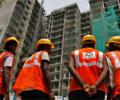
Based on the evidence at hand, Modi's goal of scripting a broader, lasting upturn appears some way off, says Rajesh Kumar Singh.

With India's GDP clocking a lower contraction of 7.5 per cent in the September quarter, industry and experts expressed confidence of further recovery in the coming months and said the government's actions are bearing fruit. In a tweet, Vedanta chairman Anil Agarwal said, "Q2 #GDP numbers show that economy is recovering. Government's efforts on stimulus and reform are showing results. Hopefully, we will have positive growth in H2 FY21 and double digit growth in FY22."

China's national health commission said 39,452 new cases were reported on Monday, including 36,304 local asymptomatic cases, as authorities scrambled to contain the fresh surge in infections.

However, Icra Rating Principal Economist Aditi Nayar feels that the numbers are a bit too optimistic and need real heavy-lifting by the Centre and the states. "The survey forecasts on real and nominal GDP will require a substantial push from Central and state spending as private sector capacity expansion is anticipated to be intermittent, and sector-specific in the next couple of quarters," she said. Nayar added that private consumption is likely to chart a differentiated recovery across income and age groups. Based on the comments made in the Survey, she expects the Union Budget to incorporate a growth in gross tax revenue of 15-16 per cent.

If the government cuts wasteful expenditure as it is trying now, the deficit would at most fall to 8 per cent, not less than that.

FY22 will be the year to rebuild with the IMF projecting output growth at 11.5 per cent, economic survey at 11.0 per cent and the RBI's Monetary Policy Committee at 10.5 per cent.

As India emerges from the COVID-19 crisis, the ninth budget under the Modi government, including an interim one, is widely expected to focus on boosting spending on job creation and rural development, generous allocations for development schemes, putting more money in the hands of the average taxpayer and easing rules to attract foreign investments.

India's GDP for the three-month period ended September 30 grew 7.4%.

The Budget, to be presented on February 1, is likely to be less worried about fiscal deficit and will be focused more on nursing the fragile growth, according to a Wall Street brokerage report. Bank of America Securities India expects the budget to peg "fiscal deficit at a high 5 per cent of GDP for FY22 and 7.2 per cent for FY21, as it is likely to step up capex, recap public sector banks, push asset sales to break government monopolies, offer sops for real estate, tax cuts for lower income groups and creation of a bad bank". Its house economists expect these spends to be funded by debt and partly by imposing a cess on high income groups and also by some non-fiscal measures like tapping the central bank's revaluation reserves and bank recapitalisation and infra bonds.

ICICI Bank was the top gainer in the Sensex pack, rising around 3 per cent, followed by Axis Bank, HDFC twins, SBI, L&T, ONGC and Infosys. On the other hand, Sun Pharma, Asian Paints, Nestle India, UltraTech Cement and HUL declined. NSE Nifty rose by 79.60 points or 0.67 per cent to 11,914.20.

Fitch Ratings on Thursday said the resurgence of COVID-19 infections may delay India's economic recovery, but won't derail it, as it kept the sovereign rating unchanged at 'BBB-' with a negative outlook. It projected a 12.8 per cent recovery in GDP in the fiscal year ending March 2022 (FY22), moderating to 5.8 per cent in FY23, from an estimated contraction of 7.5 per cent in 2020-21. Fitch had in June last year revised outlook for India to 'negative' from 'stable' on grounds that the coronavirus pandemic had significantly weakened the country's growth outlook and exposed the challenges associated with a high public debt burden.

India's GDP estimates for 2020-21 show that the economy is expected to perform much better than earlier projections by different agencies, indicating a sustained V-shape post-lockdown recovery, experts said. The first Advance Estimates (AE) by the National Statistics Office (NSO) has projected a contraction of 7.7 per cent in the real GDP during 2020-21. This was better than the projections by certain international agencies like the IMF and World Bank.
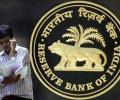
The Reserve Bank is expected to go for another rate hike of 0.40 per cent at the scheduled review of the monetary policy next week, a foreign brokerage said on Friday. The central bank's rate setting panel will follow it up with a 0.35 per cent hike in rates at the next review in August, or make it into a 0.50 per cent hike next week and a 0.25 per cent increase in August, to make the total quantum of rate hikes at 0.75 per cent, the report by Bofa Securities said. On May 4, the Reserve Bank of India (RBI) hiked rates by 0.40 per cent, and Governor Shaktikanta Das has already called a rate hike at the forthcoming review as a "no brainer" given the pressure to maintain its core mandate of inflation in the targeted band of under 6 per cent.

The Reserve Bank on Tuesday lowered the growth projection for the current fiscal to 5.5 per cent from its earlier estimate of 5.7 per cent and asked the government to undertake policy measures to improve investment climate.

Those hardest hit by the second wave of the pandemic have been blue-collared workers, doctors and healthcare workers, law and order and municipal personnel, individuals eking out daily livelihood, and small businesses. And there should be more measures taken to alleviate their pain, the Reserve Bank of India (RBI) said on Monday. The report also indicated that the RBI's growth numbers might have to be revisited as the central bank's real GDP growth projection of 26.2 per cent given in the MPC's resolution of April 7 for the first quarter of 2021-22, were "made before the full fury of the resurgence." Nevertheless, the "resurgence of COVID-19 has dented but not debilitated economic activity in the first half of Q1: 2021-22.

'I believe the modified scheme is much more beneficial and simpler.'

Savings in deposits by the households rose, however, to Rs 1 trillion (17 per cent) in the year to Rs 6.91 trillion in FY14 as against Rs 5.91 trillion in 2012-13.

'We expect the bull run to continue until economic growth continues.'

'RBI is already late in addressing inflation pressures.'

Concerned over elevated inflation, Reserve Bank of India on Friday decided to leave the benchmark interest rate unchanged at 4 per cent but maintained an accommodative stance, implying more rate cuts in the future if need arises to support the economy hit by the Covid-19 pandemic.

'The finance ministry and the RBI will never admit to the difficulties in the economy because if they do so, it will adversely impact the financial markets, etc.' 'They like to present a rosy picture that everything is fine and under control.'

Non-banking finance companies face renewed asset quality and liquidity risks amid a second wave of COVID-19, Fitch Ratings said on Thursday. These challenges are likely to increase if recent restrictions to contain the pandemic are expanded or prolonged, leading to greater economic and operational disruption, it added. The rating agency further said that an increase in the rate of infections and broadening of social distancing restrictions pose downside risks to its 12.8 per cent growth projection for the current fiscal.
 © 2026 Rediff.com - Advertise with us - Disclaimer - Privacy Policy - Sitemap - Feedback - About us - Terms of use - Grievances